
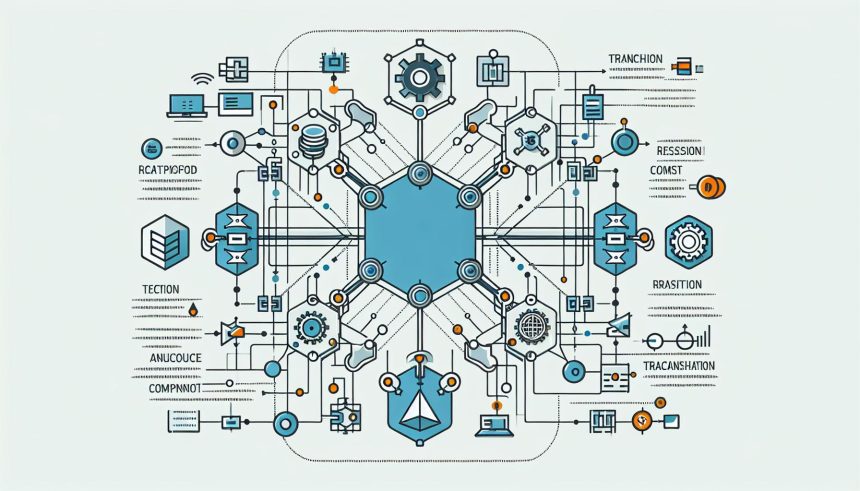
Network Architecture in Crypto: Building Secure and Scalable Blockchain Systems
Network Architecture is a foundational concept for anyone exploring cryptocurrency, blockchain platforms, and Web3 applications. On crypto621, we focus on practical knowledge that helps users understand how crypto networks operate under the hood. In simple terms, Network Architecture describes how nodes, clients, validators, and supporting services connect and communicate to move transactions, share data, and maintain consensus. A well designed architecture improves performance, reduces attack surfaces, and supports long term growth for a blockchain ecosystem.
- What Network Architecture Means in Blockchain
- Core Components of Crypto Network Architecture
- Network Topology and Peer Connectivity
- Consensus Design Impacts Architecture
- Layered Architecture: Base Layer and Scaling Layers
- Security Considerations in Network Architecture
- Performance, Reliability, and User Experience
- How to Evaluate Network Architecture for a Crypto Project
As adoption increases, crypto networks must handle higher transaction volumes, more complex smart contracts, and global participation. This makes Network Architecture a key differentiator between networks that remain reliable during peak demand and networks that struggle with congestion, downtime, or security incidents. Understanding these architectural choices helps investors, developers, and users evaluate a project beyond marketing and price action.
What Network Architecture Means in Blockchain
In a blockchain context, Network Architecture covers how the peer to peer network is structured, how data is propagated, and how participants reach agreement on the state of the ledger. It includes the physical and logical topology of nodes, client software design, and the layers that support consensus, execution, and storage.
Unlike traditional centralized systems, most blockchain networks rely on distributed participants that may be anonymous and geographically dispersed. This requires careful design choices to ensure that messages travel efficiently, that nodes can join and sync safely, and that malicious actors cannot easily disrupt the network.
Core Components of Crypto Network Architecture
A crypto network is more than a chain of blocks. It is an interconnected system of roles and services working together. Key components often include:
- Nodes that store blockchain data and relay messages to peers
- Validators or miners that propose and confirm new blocks
- Full clients that verify the complete state and enforce protocol rules
- Light clients that verify data with minimal storage and bandwidth
- Mempool logic that manages unconfirmed transactions waiting for inclusion
- Networking protocols that govern peer discovery, message formats, and propagation
- Remote procedure call endpoints that enable wallets, exchanges, and apps to query the chain
Each component affects speed, decentralization, and resilience. For example, encouraging more full nodes increases verification and redundancy, while robust peer discovery improves connectivity and reduces reliance on a small set of well known nodes.
Network Topology and Peer Connectivity
Most blockchains use a peer to peer model where each node connects to multiple peers. This redundancy helps the network keep functioning even if some peers go offline. Connectivity choices such as the number of peer connections, geographic diversity, and latency tolerance can influence how quickly blocks and transactions propagate.
Propagation speed matters because slower propagation can increase the chance of competing blocks, wasted work, and temporary chain splits. Good Network Architecture aims to reduce these risks with efficient gossip style messaging, smart relay rules, and protective limits that reduce spam without blocking legitimate traffic.
Consensus Design Impacts Architecture
Consensus is the mechanism that determines which blocks are accepted as the canonical ledger. The consensus approach shapes the Network Architecture requirements. Proof of Work networks require miners to broadcast candidate blocks and rely on fast propagation for fair competition. Proof of Stake networks require validators to exchange votes and finality messages, often leading to additional communication patterns and stronger needs for time synchronization.
Finality focused systems often add distinct layers for consensus messaging and block execution. This can improve safety guarantees but can also raise complexity. Evaluating a crypto project includes asking whether its Network Architecture matches its consensus design and whether it can sustain real world usage.
Layered Architecture: Base Layer and Scaling Layers
Modern crypto ecosystems frequently use layered design. The base layer prioritizes security and decentralization, while scaling layers handle higher throughput. Layer two networks, payment channels, and rollups are examples of architectural extensions that reduce load on the base chain while keeping strong security ties.
From an SEO perspective, Network Architecture is often discussed alongside scalability, throughput, and transaction fees. In practice, layered systems aim to keep fees stable and user experience smooth without sacrificing trust. A clear architecture also enables wallets and decentralized applications to route transactions correctly between layers.
Security Considerations in Network Architecture
Security is not only about cryptography. Network Architecture choices can prevent or enable attacks. Common threats include eclipse attacks that isolate a node from honest peers, denial of service floods, and routing manipulation. Strong designs mitigate these threats with peer diversity, rate limiting, authenticated connections where appropriate, and robust validation rules.
Infrastructure security also matters. Many users interact with the chain through remote procedure call providers. If too much traffic depends on a small number of services, the ecosystem can become fragile. Encouraging multiple providers, supporting self hosted nodes, and designing efficient light client options all improve resilience.
Performance, Reliability, and User Experience
Users care about confirmation times, wallet responsiveness, and application reliability. These experiences depend heavily on Network Architecture. Efficient data propagation reduces time to inclusion. Stable node software reduces crashes. Well tuned storage and state management reduce sync times and make new nodes easier to run.
For developers, a predictable and well documented architecture lowers integration risk. For users, it translates to smoother swaps, faster transfers, and fewer stuck transactions during busy market conditions.
How to Evaluate Network Architecture for a Crypto Project
If you are analyzing a blockchain or investing in a token, understanding Network Architecture can reveal strengths and weaknesses that are not visible in price charts. Consider these practical checkpoints:
- Decentralization metrics such as number of independent validators and node distribution
- Client diversity and whether multiple implementations exist to reduce systemic risk
- Network performance under load and historical uptime during market volatility
- Clarity of scaling approach and how layers interact with user wallets
- Security posture including peer management, spam resistance, and documented audits
On crypto621, we recommend looking for projects that balance decentralization, security, and performance with transparent architecture decisions. A strong Network Architecture is not just technical detail. It is the backbone that supports trust, adoption, and long term utility in the crypto economy.