
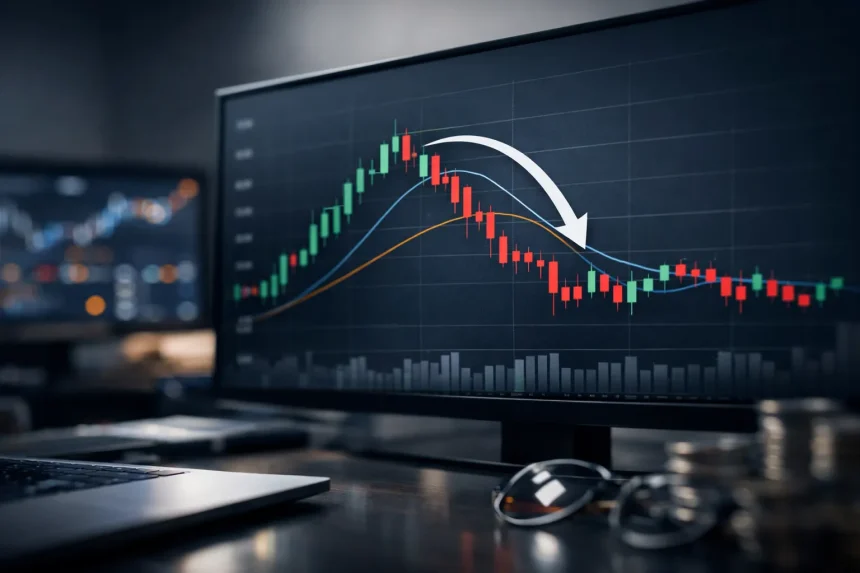
Momentum Shift in Crypto Trading How to Spot Trend Changes and Manage Risk
Momentum Shift is one of the most important concepts in crypto trading because digital assets can change direction quickly and with force. A Momentum Shift happens when the speed and strength of a price move begins to fade and a new move starts to take control. On crypto621, we focus on practical trading knowledge, and understanding Momentum Shift can help traders avoid chasing late entries, improve timing, and protect capital during volatile market phases.
- What Momentum Shift Means in Crypto Markets
- Key Signs of a Momentum Shift
- Popular Indicators That Help Confirm Momentum Shift
- Market Structure and Momentum Shift Confirmation
- How to Trade Momentum Shift with a Risk First Mindset
- Why Momentum Shift Matters for Long Term Investors Too
- Conclusion Building a Momentum Shift Checklist
Crypto markets are driven by sentiment, liquidity, leverage, and news cycles. Because of that, momentum can flip fast, especially around key levels such as previous highs, round number prices, and major support and resistance zones. Learning to identify Momentum Shift does not require predicting the future. It requires reading evidence in price action, volume, and indicators and then responding with a plan.
What Momentum Shift Means in Crypto Markets
Momentum refers to how strongly price is moving in a direction. When momentum is rising, candles typically expand, pullbacks stay shallow, and buyers or sellers appear confident. A Momentum Shift occurs when that behavior changes. You may notice smaller candles, failed breakouts, deeper pullbacks, or a repeated inability to push into new highs or lows. In crypto, this often shows up near key liquidity zones where large orders get filled and the market transitions from accumulation to expansion or from distribution to decline.
It is important to separate Momentum Shift from a simple pause. A pause may be a consolidation before the same trend continues. A true Momentum Shift more often includes a change in market structure, such as a break of a recent swing low during an uptrend or a break of a recent swing high during a downtrend.
Key Signs of a Momentum Shift
Momentum Shift signals become more reliable when multiple clues align. Relying on a single indicator is risky in crypto because sudden spikes can create false signals. Consider these common signs that momentum is changing.
- Price makes a new high but momentum indicators fail to confirm, creating divergence
- Breakouts above resistance fail and price quickly returns below the breakout area
- Volume increases on down candles after a long bullish run, suggesting distribution
- Higher highs continue but the distance between swings gets smaller, showing exhaustion
- A key support level breaks and is then retested from below and rejected
- Funding rates and open interest become extreme, often preceding a reversal
In many cases, traders who spot a Momentum Shift early do not immediately jump into a reversal trade. Instead, they tighten risk controls, take partial profits, and wait for confirmation such as a structure break and a retest.
Popular Indicators That Help Confirm Momentum Shift
Technical indicators can help quantify what your eye sees in the chart. On crypto621 we recommend combining trend context with one or two momentum tools rather than stacking many indicators. Here are some of the most useful options.
- Relative Strength Index to detect overbought and oversold zones and divergence
- Moving Average Convergence Divergence to spot weakening trend strength and crossovers
- Volume analysis to confirm whether moves are supported by participation
- Exponential moving averages to track when price stops respecting a trend line proxy
- Average True Range to understand whether volatility is expanding or contracting
A common example is bullish divergence during a downtrend, where price makes a lower low but RSI makes a higher low. That can hint at a Momentum Shift, especially if it happens at a long term support area. Confirmation may come when price breaks above a recent swing high and holds it.
Market Structure and Momentum Shift Confirmation
Market structure provides a clear framework for confirmation. In an uptrend, structure forms higher highs and higher lows. When momentum shifts, you often see a break of the most recent higher low, followed by failure to reclaim it. In a downtrend, structure forms lower lows and lower highs, and a Momentum Shift may appear when price breaks above the most recent lower high and then successfully retests that level as support.
This approach helps traders avoid emotional decisions. Instead of reacting to every candle, you wait for structure evidence. Crypto markets can fake out traders with quick wicks, so closing prices and retests often matter more than intraday spikes.
How to Trade Momentum Shift with a Risk First Mindset
Trading Momentum Shift can be profitable, but it can also be dangerous because reversals are volatile. A risk first mindset makes your strategy more resilient. Consider these practical steps.
- Reduce position size when trading potential reversals rather than trend continuation
- Use invalidation levels based on structure, such as above a recent swing high for shorts
- Scale out of winning trades as momentum slows instead of aiming for perfect tops or bottoms
- Wait for confirmation such as a break and retest instead of entering on the first signal
- Set alerts at major levels to avoid overtrading during noise
For example, if Bitcoin rallies strongly into a well known resistance zone and then prints multiple rejection candles with rising sell volume, that can hint at a Momentum Shift. A conservative trader might take profits on longs and wait. An aggressive trader might look for a structure break and a retest before considering a short with a defined stop.
Why Momentum Shift Matters for Long Term Investors Too
Momentum Shift is not only for active traders. Long term investors can use momentum tools to improve entries and manage exposure. When momentum shifts from bearish to bullish on higher time frames, it can suggest that risk is decreasing and accumulation may be starting. When momentum shifts from bullish to bearish, investors may choose to rebalance, hedge, or stagger buys instead of buying all at once.
On higher time frames, a Momentum Shift often aligns with macro factors such as easing inflation expectations, improving liquidity conditions, or major crypto adoption news. Combining market structure with basic on chain and sentiment data can add confidence.
Conclusion Building a Momentum Shift Checklist
Momentum Shift is a powerful lens for understanding when crypto trends are weakening and when new opportunities may emerge. The best results come from using a checklist that blends price action, structure, volume, and one or two momentum indicators. On crypto621, our goal is to help you make decisions based on evidence and risk control. Whether you trade intraday or invest long term, learning to identify Momentum Shift can improve timing, reduce emotional trading, and support more consistent performance in fast moving crypto markets.