
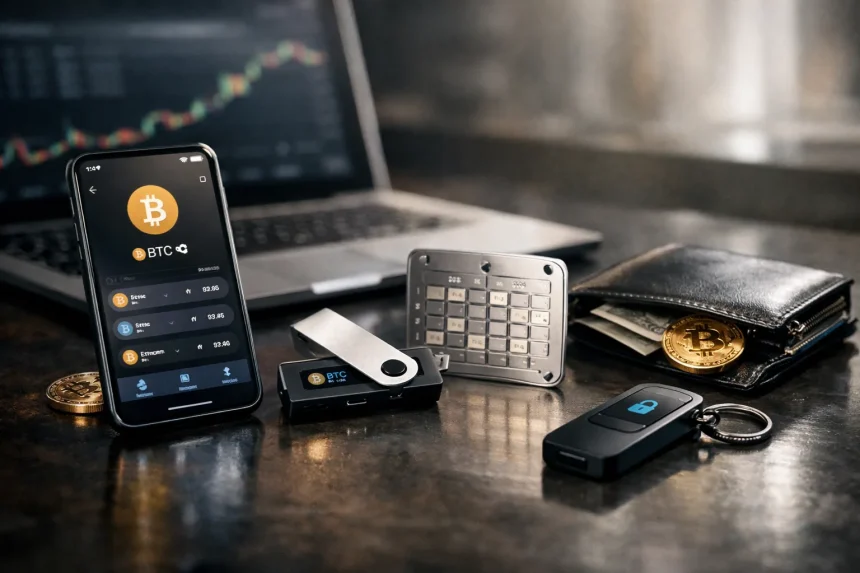
Crypto Wallet Types Explained for Secure Digital Asset Management
Understanding crypto wallet types is essential for anyone who holds Bitcoin, Ethereum, or any other digital asset. A crypto wallet is not a place where coins physically sit. Instead, it is a tool that manages private keys and public addresses that let you access and control funds on a blockchain. Choosing the right wallet can improve security, simplify daily transactions, and reduce the risk of loss.
- Why Crypto Wallet Types Matter
- Hot Wallets for Everyday Access
- Cold Wallets for Stronger Long Term Security
- Software Wallets on Desktop and Mobile
- Web Wallets and Exchange Wallets
- Hardware Wallets for Offline Key Storage
- Paper Wallets and Other Offline Methods
- Custodial vs Non Custodial Wallets
- How to Choose the Right Crypto Wallet Type
At crypto621, we aim to help readers make smart crypto decisions with clear guidance. This article covers the main crypto wallet types, what they are best for, and how to choose the right option based on security and convenience.
Why Crypto Wallet Types Matter
Different wallet designs serve different goals. Some wallets prioritize speed and ease of use for frequent transfers. Others focus on long term storage and strong security. Your best choice depends on how often you trade, how much you hold, and your comfort level with managing recovery phrases and backups.
When you understand crypto wallet types, you can also better understand threats such as phishing, device compromise, and accidental loss of access. The right wallet selection helps you match your risk level with practical protection.
Hot Wallets for Everyday Access
Hot wallets are connected to the internet. They are popular for active users because they provide quick access to funds and usually have friendly interfaces. Since hot wallets are online, they can be more exposed to hacking attempts, so they are generally best for smaller balances used in daily activity.
Common hot wallet options include software wallets and web based wallets. Many traders keep only spending money in a hot wallet and store the rest in a more secure setup.
- Best for frequent transactions and quick sending or receiving
- Typically easy to set up and use
- Higher exposure to online threats compared to offline methods
Cold Wallets for Stronger Long Term Security
Cold wallets store private keys offline. This reduces exposure to online attacks, making cold storage a preferred solution for long term holders and anyone securing larger amounts. Cold wallets can be hardware devices or paper based methods. Because they are less convenient for daily payments, many users combine cold storage with a hot wallet for spending.
If you are building a long term portfolio, cold wallets can reduce the chance of losing funds due to malware or compromised accounts. The key is to store recovery details safely and plan for backup access.
- Best for long term holding and larger balances
- Lower risk from online hacking attempts
- Less convenient for frequent transfers
Software Wallets on Desktop and Mobile
Software wallets are applications that run on a computer or smartphone. They are among the most common crypto wallet types because they balance usability with reasonable security when used correctly. Many software wallets support multiple networks and tokens, and some include built in swapping or connection to decentralized applications.
Mobile wallets are often used for quick payments and scanning QR codes. Desktop wallets can offer more advanced features and may be preferred for users who want a larger screen and more control. In both cases, strong device security matters. A locked phone, updated operating system, and careful app downloads can significantly reduce risk.
- Good balance of convenience and control
- Often supports many chains and tokens
- Security depends on device health and user habits
Web Wallets and Exchange Wallets
Web wallets operate through a browser, and exchange wallets are balances held on a trading platform. These options are popular because they are extremely easy to access, especially for beginners who buy crypto on an exchange. The key downside is custody. When an exchange holds your crypto, you rely on that platform to protect the private keys.
For active traders, exchange wallets can be practical. For long term storage, many users prefer moving assets to a wallet where they control the keys. A good approach is to keep trading funds on an exchange and withdraw long term holdings to a personal wallet setup.
- Very convenient for buying, selling, and trading
- Custody risk if the platform is compromised or restricted
- Better suited for active use rather than deep storage
Hardware Wallets for Offline Key Storage
Hardware wallets are physical devices designed specifically to store private keys offline. They are considered one of the most secure crypto wallet types for personal custody. Transactions are signed on the device, which helps protect keys even if the connected computer is infected.
Hardware wallets require careful setup. You must properly store the recovery phrase and verify addresses on the device screen when sending funds. For many investors, the additional steps are worth it because of the strong security advantages.
- Excellent option for long term storage and higher balances
- Keys remain offline during typical use
- Requires secure backup of recovery phrase
Paper Wallets and Other Offline Methods
Paper wallets involve generating keys and addresses and storing them physically, such as on paper. While the idea is simple, paper wallets can be risky due to printing issues, exposure, physical damage, or mistakes during creation. They are generally less recommended today compared to modern hardware wallets, but they remain part of the broader discussion of crypto wallet types.
If you explore paper based storage, secure generation and safe physical protection are critical. Many people prefer hardware wallets because they reduce human error and provide safer signing methods.
Custodial vs Non Custodial Wallets
Another major way to categorize crypto wallet types is custodial versus non custodial. Custodial means a third party controls the private keys for you, as with most exchanges. Non custodial means you control the keys and have full responsibility for backups and recovery.
Non custodial wallets provide stronger ownership and independence, but they require discipline. Losing your recovery phrase can mean permanent loss of access. Custodial wallets can be easier for beginners but may involve platform risk and restrictions.
- Custodial offers convenience but reduces direct control
- Non custodial offers true ownership but requires secure backups
- Choosing depends on risk tolerance and experience level
How to Choose the Right Crypto Wallet Type
To choose among crypto wallet types, start with your purpose. If you transact daily, a reputable software wallet may be suitable. If you hold significant value long term, consider a hardware wallet or another cold storage approach. Many users adopt a layered strategy that includes a hot wallet for spending and cold storage for savings.
Also consider compatibility with the networks you use, the ease of backing up recovery phrases, and whether you need features like staking or decentralized application access. In all cases, focus on safe habits such as avoiding suspicious links, verifying addresses, and storing recovery information in a secure place.
Crypto wallet types are not one size fits all. With the right setup, you can improve security, reduce stress, and manage your digital assets with greater confidence as the crypto market evolves.