Crypto Wallet Security Tips to Protect Your Digital Assets
Crypto wallet security tips are essential for anyone who owns Bitcoin, Ethereum, stablecoins, or any other digital asset. A crypto wallet is the gateway to your funds, and strong security habits can be the difference between confident ownership and irreversible loss. Unlike traditional banking, cryptocurrency transactions cannot usually be reversed, and customer support cannot restore access if your private keys are stolen or your recovery phrase is exposed. That is why crypto621 recommends building a clear security routine before your portfolio grows.
- Choose the Right Wallet Type for Your Needs
- Understand Private Keys and Recovery Phrases
- Create Safe Backup and Storage Practices
- Use Strong Authentication and Device Security
- Enable Two Factor Authentication Where Possible
- Watch for Phishing and Fake Wallet Apps
- Use Smart Transaction Habits
- Separate Wallets for Different Purposes
- Best Practice Checklist for Daily Safety
- Final Thoughts on Crypto Wallet Security Tips
This guide explains practical crypto wallet security tips that work for beginners and experienced users. You will learn how to choose the right type of wallet, protect your recovery phrase, reduce phishing risks, secure your devices, and improve your long term safety with simple daily practices.
Choose the Right Wallet Type for Your Needs
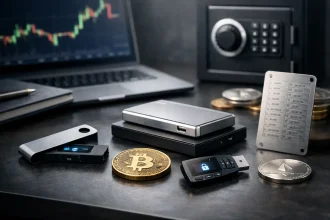
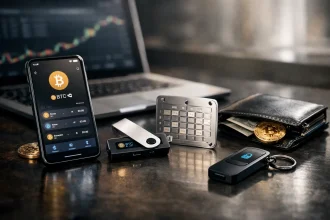
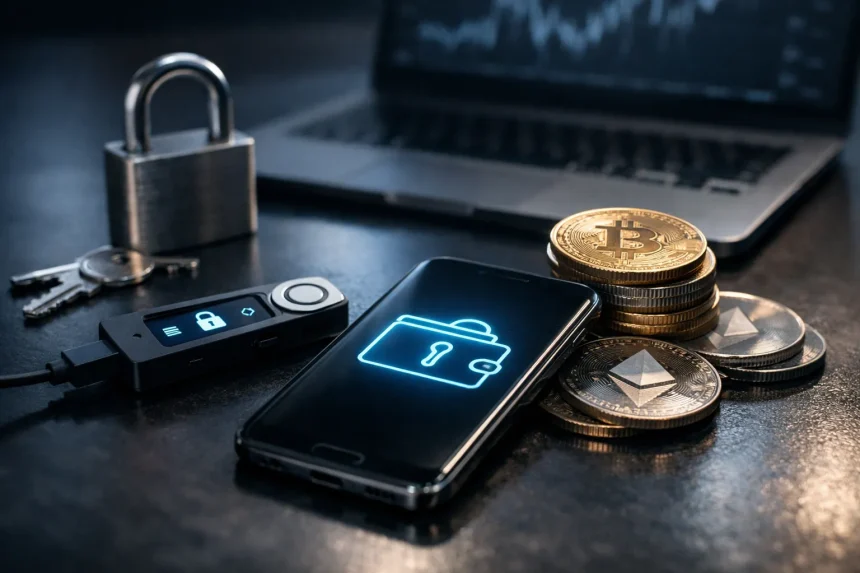
One of the most important crypto wallet security tips is choosing a wallet that matches your risk level and how often you transact. Hardware wallets are widely considered the strongest option for long term storage because the private keys stay on a dedicated device. Software wallets on mobile or desktop can be secure when managed properly but they are more exposed to malware and device compromise. Web wallets and browser extensions offer convenience but require extra caution due to phishing and fake websites.
A smart approach is to keep a small spending balance in a software wallet and store larger holdings in a hardware wallet. This reduces the amount at risk if your phone or computer is compromised.
Understand Private Keys and Recovery Phrases
Private keys and recovery phrases are the true ownership proof of your crypto. If someone gets your recovery phrase, they can recreate your wallet on their device and move your funds. Crypto wallet security tips always begin with one rule: never share your recovery phrase with anyone. No legitimate wallet company, exchange, or support agent will ever need it.
Write your recovery phrase down offline and store it in a secure location. Avoid saving it in screenshots, notes apps, cloud drives, email drafts, or messaging apps. Digital copies are easy to leak through sync services, malware, or account takeovers.
Create Safe Backup and Storage Practices
Backups are crucial because losing your device is common, but losing your recovery phrase is permanent. Use crypto wallet security tips that focus on durability and privacy. Consider storing the phrase in a fire resistant and water resistant way, such as inscribing it on a dedicated metal backup product. Keep backups in a secure location that only you can access.
Many users also keep two backups in separate places to reduce the risk of theft, fire, or flooding. If you do, ensure both locations are equally protected and private. Never label the backup as crypto, wallet, or seed phrase.
Use Strong Authentication and Device Security
Crypto wallet security tips must include device protection because most attacks target phones and computers. Enable a strong screen lock on your phone, preferably a long passcode rather than a simple pattern. Keep your operating system updated and install apps only from official stores. Avoid unknown downloads, pirated software, and suspicious browser extensions.
If your wallet supports it, enable biometric unlock plus a strong wallet passcode. Use full disk encryption on laptops and set up auto lock timers so your devices lock quickly when unattended.
Enable Two Factor Authentication Where Possible
While self custody wallets do not always use two factor authentication, any related services such as exchanges, email accounts, and password managers should. Use an authenticator app rather than SMS when available because SIM swap attacks can bypass text messages. This is one of the most effective crypto wallet security tips for preventing account takeovers that could lead to wallet compromise.
Secure the email account tied to your exchange logins with a strong password and two factor authentication. Your email is often the reset key for other accounts.
Watch for Phishing and Fake Wallet Apps
Phishing is a leading cause of stolen funds, and crypto wallet security tips should prioritize scam prevention. Always verify website URLs carefully before connecting your wallet. Fake sites often look identical to real ones. Bookmark official sites and use those bookmarks instead of clicking ads or links in social media messages.
Only download wallet apps from the official publisher and verify reviews, install counts, and the official website listing. Be cautious with direct messages offering support, giveaways, or urgent security warnings. Scammers commonly pressure users into entering a recovery phrase on a fake page.
Use Smart Transaction Habits
Another set of crypto wallet security tips involves how you transact. Before sending funds, confirm the address carefully. Malware can replace copied addresses in your clipboard. A good habit is to compare the first and last several characters of the address on screen.
For new addresses or large transfers, send a small test transaction first. Also review token approvals for decentralized applications and revoke old approvals you no longer need. Reducing unnecessary permissions limits the damage if a decentralized application is compromised.
Separate Wallets for Different Purposes
Compartmentalization is a powerful security strategy. Use one wallet for long term holdings, another for trading, and another for interacting with decentralized applications. This way, if a high risk wallet connected to multiple sites is compromised, your main savings remain isolated. Crypto wallet security tips that promote separation help reduce total exposure without limiting your activity.
Best Practice Checklist for Daily Safety
- Store large holdings in a hardware wallet and keep only spending funds in hot wallets
- Never share your recovery phrase and never type it into websites or forms
- Keep offline backups and avoid cloud storage for sensitive secrets
- Use strong device locks, update software regularly, and avoid risky downloads
- Enable authenticator based two factor authentication on exchanges and email
- Verify URLs, avoid clicking ads, and ignore unsolicited support messages
- Double check recipient addresses and send test transactions for large transfers
- Use separate wallets for savings, trading, and decentralized application activity
Final Thoughts on Crypto Wallet Security Tips
Crypto wallet security tips are not about paranoia, they are about building resilient habits. A few careful steps can protect years of investing. On crypto621, we recommend starting with strong recovery phrase protection, using reliable wallet types, and practicing safe browsing and transaction routines. If you secure your keys, verify what you sign, and reduce exposure with smart wallet separation, you dramatically lower the risk of losing your digital assets.