
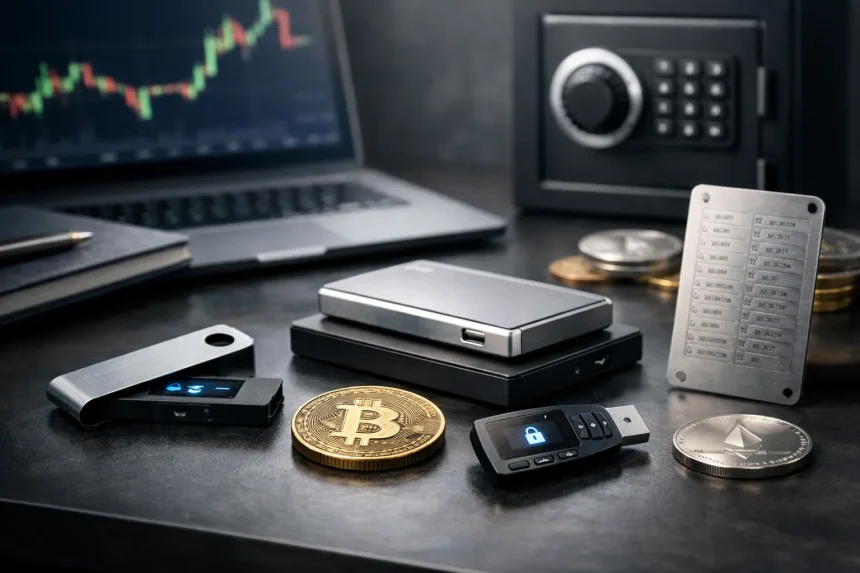
Crypto Storage Options for Secure and Convenient Digital Asset Management
Crypto storage options are one of the most important topics for anyone using Bitcoin, Ethereum, or other digital assets. The way you store your crypto directly affects your security, privacy, and ability to access funds when you need them. For readers of crypto621, understanding the main storage methods helps you reduce risk, avoid common scams, and choose tools that match your goals, whether you trade daily or hold long term.
- Understanding custodial and non custodial storage
- Exchange accounts as a crypto storage option
- Hot wallets for everyday access
- Cold wallets and offline protection
- Hardware wallets for long term holders
- Paper and physical backups done correctly
- Multi signature wallets for advanced security
- Choosing the right crypto storage options for your needs
At a basic level, crypto is controlled through private keys. Whoever controls the private keys controls the coins. This is why storage is not just about where an app sits on your phone or computer. It is about who has access to the keys and how safely they are protected. The best strategy depends on how often you transact, how much you hold, and how comfortable you are managing backups.
Understanding custodial and non custodial storage
Crypto storage options generally fall into two categories: custodial and non custodial. Custodial storage means a third party holds the private keys on your behalf, usually an exchange or a hosted wallet provider. Non custodial storage means you control your keys directly through a wallet you manage.
Custodial solutions can be convenient, especially for beginners and active traders. However, they add counterparty risk. If the provider is hacked, experiences insolvency, or restricts withdrawals, your access to funds may be impacted. Non custodial solutions give you full control but also make you responsible for protecting your recovery phrase and maintaining safe practices.
Exchange accounts as a crypto storage option
Keeping crypto on an exchange account is common because it is fast for trading and often integrates with fiat deposits and withdrawals. Many exchanges also provide security measures such as two factor authentication, withdrawal whitelists, and internal risk monitoring.
Still, storing large amounts on an exchange is typically not ideal for long term holders. You do not control the private keys, and platform risk is real. A practical approach is to keep only the amount you plan to trade and move long term holdings to a wallet where you control access.
Hot wallets for everyday access
Hot wallets are connected to the internet. They include mobile wallets, browser extensions, and desktop wallets. This category is popular because it offers speed and ease of use. You can send and receive crypto, interact with decentralized finance apps, and manage multiple networks often within one interface.
Hot wallets are best for smaller balances and frequent transactions. Because they operate on connected devices, they are more exposed to phishing, malware, and fake apps. For stronger protection, use device passcodes, biometric locks where available, and reputable wallet software from official sources.
- Mobile wallets are convenient for payments and quick transfers
- Browser extension wallets enable decentralized app access
- Desktop wallets can offer advanced features and local control
Cold wallets and offline protection
Cold storage refers to keeping private keys offline. This reduces exposure to online attacks and is often recommended for long term holdings. Cold crypto storage options include hardware wallets and more manual methods like offline signing setups. The main idea is that your keys never touch an internet connected environment.
Cold storage provides strong protection against remote hacking, but it requires careful setup and storage of recovery information. If you lose your recovery phrase and device access, you may permanently lose funds. For many users, a reputable hardware wallet combined with secure backups offers the best balance of usability and safety.
Hardware wallets for long term holders
Hardware wallets are specialized devices designed to store private keys securely and sign transactions. They keep keys isolated and confirm transactions on the device screen. This makes it harder for malware on your computer or phone to steal keys or alter transaction details unnoticed.
When choosing a hardware wallet, consider the supported networks, ease of firmware updates, backup process, and the supplier reputation. Always buy from official sources to reduce the risk of tampering. After setup, store the recovery phrase in a safe place and never type it into websites or share it with anyone.
- Best for long term storage and larger balances
- Reduces exposure to phishing that targets hot wallets
- Requires responsible backup management
Paper and physical backups done correctly
Some users choose to record their recovery phrase on paper or a more durable material and keep it in a secure location. The goal is to protect against device loss, damage, or accidental deletion. Proper physical backup practices can strengthen any wallet type, including hardware wallets and non custodial hot wallets.
However, physical backups carry their own risks. Anyone who finds your recovery phrase can take your funds. Avoid storing it in easily accessible places, avoid photographing it, and avoid saving it in cloud notes or email drafts. If you want additional resilience, consider geographic separation of backups and secure storage solutions that fit your threat model.
Multi signature wallets for advanced security
Multi signature wallets require more than one approval to move funds. For example, you can set a system where two out of three keys must sign a transaction. This can protect against a single compromised device or a single lost key. Multi signature setups are common for teams, treasuries, and users who want stronger controls for large holdings.
The tradeoff is additional complexity. You must plan key storage carefully and ensure that your recovery process is clear. For serious long term holdings, multi signature can be one of the most effective crypto storage options available.
Choosing the right crypto storage options for your needs
The best crypto storage strategy is often a layered approach. Many users keep a small spending amount in a hot wallet, maintain trading funds on an exchange only when needed, and store long term holdings in cold storage. This reduces risk without sacrificing convenience.
Before you decide, ask yourself how often you transact, how much you hold, and what threats you are most concerned about. Also consider your ability to manage recovery phrases and operational routines. On crypto621, we recommend prioritizing control, safe backups, and simple processes you can follow consistently. Crypto security is less about perfect tools and more about reliable habits that protect your keys over time.