
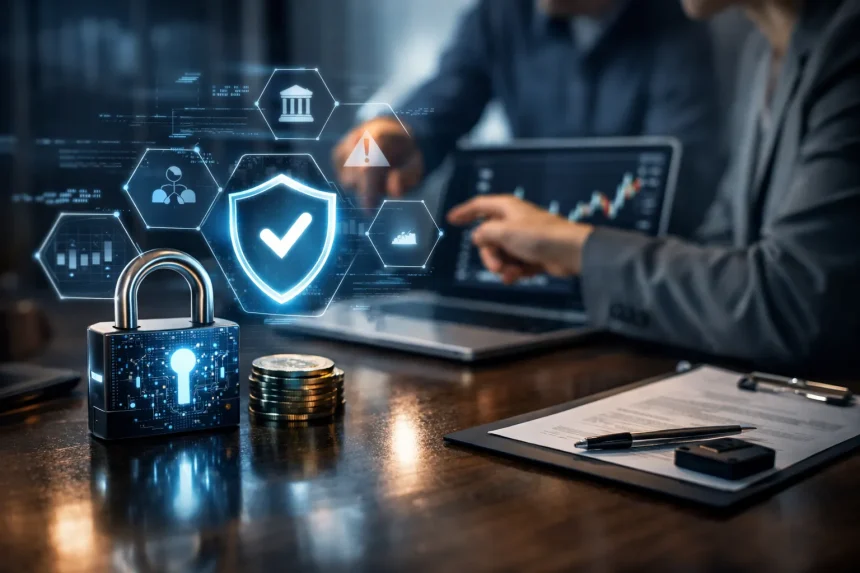
DeFi Security Measures: How to Protect Your Crypto Assets in a Decentralized World
Decentralized finance has transformed how people trade, lend, borrow, and earn yield using blockchain technology. While DeFi delivers transparency and open access, it also introduces unique risks that do not exist in traditional finance. Smart contract vulnerabilities, wallet compromise, malicious tokens, and social engineering are common threats that can lead to irreversible losses. For crypto621 readers, understanding DeFi security measures is essential for safeguarding funds and building long term confidence in decentralized protocols.
- Why DeFi Security Measures Matter
- Use Secure Wallet Practices and Strong Operational Hygiene
- Verify Protocol Legitimacy Before Connecting
- Understand Smart Contract Risk and Audit Signals
- Limit Token Approvals and Revoke Unused Permissions
- Reduce Exposure to Price Manipulation and Liquidity Risks
- Watch for Phishing, Fake Tokens, and Social Engineering
- Best Practice Checklist for DeFi Security Measures
Because DeFi transactions are typically irreversible, prevention matters more than recovery. Strong security is not a single tool or setting. It is a set of habits and checks you apply before, during, and after interacting with any protocol. The following guidance focuses on practical DeFi security measures that users can implement immediately, plus protocol level safeguards that indicate higher quality platforms.
Why DeFi Security Measures Matter
DeFi shifts responsibility from banks and custodians to users and code. That means there is no customer support desk that can reverse a transaction or restore access if you sign a malicious approval. Attackers exploit this reality. They target weak smart contracts, poorly configured admin keys, compromised front ends, and human mistakes. Even experienced users can be caught by a convincing phishing site or a fake token with the same name as a legitimate asset.
Effective DeFi security measures reduce risk across three layers: your wallet and device, the protocol you interact with, and the transaction permissions you grant. When you treat each layer as a potential attack surface, you make it significantly harder for mistakes or exploits to impact your portfolio.
Use Secure Wallet Practices and Strong Operational Hygiene
Your wallet is the gateway to DeFi. If the wallet is compromised, your DeFi positions can be drained quickly. Start with a dedicated approach to wallet security that separates long term holdings from active trading funds.
- Use a hardware wallet for meaningful amounts. It isolates private keys from internet connected devices and requires physical confirmation.
- Create separate wallets for different activities, such as a main vault wallet, a DeFi wallet, and a testing wallet for new dApps.
- Store seed phrases offline in secure locations. Never type them into websites, forms, or chat apps.
- Keep your browser and operating system updated and avoid installing unknown extensions that can read web traffic.
- Prefer wallet apps that support clear transaction simulation and human readable prompts.
Many incidents are not complex hacks but simple theft through malware or phishing. A clean device, minimal extensions, and careful wallet segregation are foundational DeFi security measures.
Verify Protocol Legitimacy Before Connecting
Before depositing funds into any protocol, confirm that the project is real, reputable, and actively maintained. Scams often mimic popular platforms with a copied interface and a slightly altered domain name. Use official sources to confirm you are on the correct site and interacting with the correct contract.
- Verify the official domain through multiple reputable sources such as the project documentation, verified social accounts, and established data aggregators.
- Confirm contract addresses from official documentation and compare them with what your wallet shows before approving transactions.
- Review whether the protocol has undergone independent audits and whether issues found were resolved.
- Check for public bug bounty programs and evidence of active security reviews.
- Look at community reputation, developer responsiveness, and transparency around incidents and updates.
Audits are important, but they are not a guarantee. A strong security posture usually includes audits, open source code, continuous monitoring, and clear disclosure practices.
Understand Smart Contract Risk and Audit Signals
Smart contracts control assets based on predefined logic. A single bug can allow attackers to drain liquidity pools, manipulate pricing, or mint tokens improperly. When assessing a protocol, look for security signals that go beyond a single audit report.
High quality audit signals include multiple audits by reputable firms, clear scope descriptions, remediation notes, and follow up reviews after major upgrades. Also pay attention to whether contracts are upgradeable. Upgradeability can enable rapid fixes, but it can also introduce governance and admin key risk if controls are weak. Clear time locks, multisignature governance, and transparent upgrade procedures are positive indicators.
Limit Token Approvals and Revoke Unused Permissions
One of the most overlooked DeFi security measures is managing token approvals. Many users grant unlimited spending allowances to save time on future transactions. If the spender address is later compromised or the protocol is exploited, your approved tokens can be drained without additional confirmations.
- Grant limited approvals when possible, especially for large balances.
- Revoke approvals you no longer need, particularly after testing a new protocol.
- Use a separate wallet with small amounts for experimenting with new tokens and farms.
Approvals are powerful permissions. Treat them like giving a service access to your bank account, and remove access when it is no longer required.
Reduce Exposure to Price Manipulation and Liquidity Risks
Some exploits do not steal keys or break contracts directly. Instead, they manipulate economic assumptions, often using thin liquidity and oracle weaknesses. Attackers can distort prices temporarily and profit through lending protocols or automated market makers.
- Avoid low liquidity pools unless you fully understand the risks and potential slippage.
- Prefer protocols that use robust oracle designs with safeguards against manipulation.
- Be cautious with highly leveraged positions, since liquidation cascades can amplify losses.
Economic security is part of DeFi security measures. A protocol can be perfectly coded yet still vulnerable to market manipulation if its design relies on weak pricing inputs.
Watch for Phishing, Fake Tokens, and Social Engineering
Attackers frequently target users rather than code. They impersonate support staff, distribute fake airdrops, and share links that lead to malicious sites. Once you sign a transaction approving token spending, funds can be drained quickly.
- Never trust direct messages offering support, refunds, or exclusive opportunities.
- Do not interact with unknown tokens sent to your wallet. They may be bait to lure you into malicious approvals.
- Type domains manually or use trusted bookmarks, and double check URLs every time.
- Read wallet prompts carefully and avoid signing blind messages with unclear intent.
User awareness remains one of the most effective DeFi security measures because many losses come from preventable mistakes.
Best Practice Checklist for DeFi Security Measures
To make security repeatable, use a consistent checklist before interacting with any new DeFi protocol.
- Use a hardware wallet and separate wallets for different risk levels
- Verify the official domain and contract addresses from trusted sources
- Review audits, bug bounties, and governance controls like multisignature and time locks
- Limit token approvals and revoke permissions regularly
- Avoid thin liquidity and understand oracle and leverage risks
- Ignore unsolicited messages and never reveal seed phrases
DeFi is an evolving ecosystem, and security practices must evolve with it. By applying these DeFi security measures consistently, crypto621 users can participate with greater confidence, reduce avoidable losses, and build a safer long term strategy in decentralized finance.