DeFi User Activity What It Reveals About the Future of Decentralized Finance
DeFi user activity is one of the clearest indicators of how decentralized finance is evolving. On crypto621, we track how real people interact with decentralized apps, lending protocols, decentralized exchanges, and onchain yield strategies. While token prices can move on news and short term sentiment, user activity reflects actual demand. It shows whether DeFi is attracting new participants, retaining experienced users, and creating reliable onchain liquidity. When DeFi user activity rises sustainably, it often signals healthier markets, better product design, and stronger trust in smart contract systems.
- What DeFi User Activity Means and Why It Matters
- Key Metrics Used to Measure DeFi User Activity
- Primary Drivers Behind Changes in DeFi User Activity
- How DeFi User Activity Differs Across Sectors
- DeFi User Activity and Onchain Trust
- Trends to Watch in DeFi User Activity in the Coming Year
- How to Use DeFi User Activity Data for Smarter Decisions
Understanding DeFi user activity also helps investors and builders identify which sectors are growing. For example, a surge in swaps can indicate higher trading interest, while consistent lending and borrowing can signal demand for capital efficient strategies. This data driven view gives a clearer picture of adoption and can help you avoid relying only on social chatter or price charts.
What DeFi User Activity Means and Why It Matters
DeFi user activity refers to the measurable actions users take across decentralized finance platforms. These actions include connecting a wallet, signing transactions, providing liquidity, borrowing assets, staking, bridging funds between networks, and participating in governance. Each action generates onchain data that can be analyzed to understand behavior patterns and engagement levels.
It matters because it reveals whether protocols are being used for real financial utility. High activity can indicate strong product market fit, better incentives, and deeper liquidity. Low or declining activity can suggest fading interest, poor user experience, high transaction costs, or concerns about security. For analysts, DeFi user activity acts like a real time dashboard for adoption.
Key Metrics Used to Measure DeFi User Activity
To evaluate DeFi user activity properly, it helps to look beyond a single number. Different metrics tell different stories about usage, retention, and capital flow.
- Active addresses, which approximate how many unique wallets interact with a protocol or network in a given time period
- Transaction count, which indicates how frequently users are engaging with DeFi apps
- Trading volume on decentralized exchanges, showing swapping demand and liquidity depth
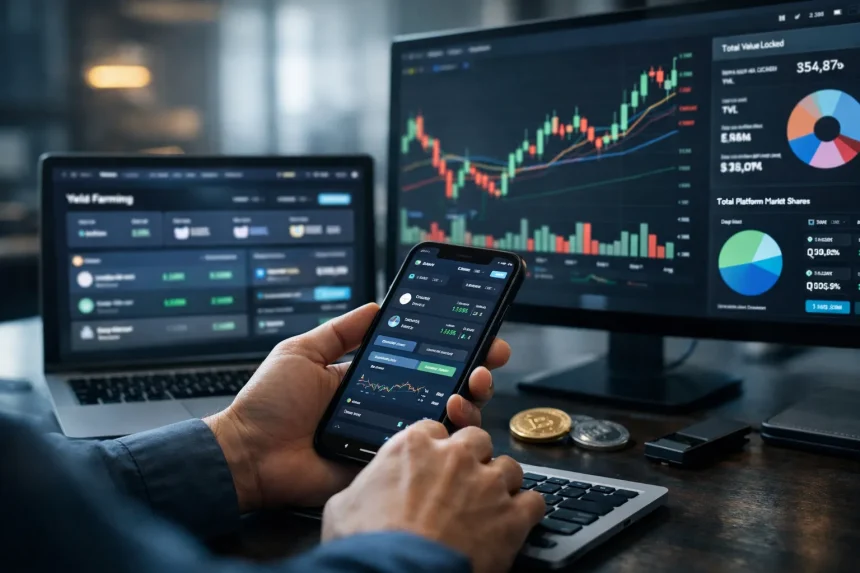
- Total value locked, which reflects how much capital is deposited in DeFi smart contracts
- Borrow and supply volume in lending markets, showing credit demand and yield seeking behavior
- Bridge usage and cross chain transfers, which reveal how users move liquidity between ecosystems
- Retention and repeat usage, which highlights whether users return after initial onboarding
For crypto621 readers, the most useful approach is combining these metrics. A protocol can show high total value locked while having low active addresses, which may suggest capital concentration rather than broad adoption. Conversely, rising active addresses with modest total value locked can indicate early growth and onboarding success.
Primary Drivers Behind Changes in DeFi User Activity
DeFi user activity shifts based on incentives, market conditions, and user experience. When yields rise or attractive reward programs launch, users often increase deposits, trades, and borrowing. When yields compress, activity may cool down, especially from opportunistic liquidity.
Network fees also matter. If transaction costs rise, smaller users may reduce activity or move to lower cost networks. Security events can cause immediate drops in usage, even if the underlying protocol remains solvent. Users react quickly to exploit news, suspicious governance proposals, or smart contract risk reports.
Another major driver is the quality of the product. Clear interfaces, strong wallet support, and reliable onchain execution encourage repeat usage. DeFi is increasingly competitive, and the simplest user journey often wins even when yield differences are small.
How DeFi User Activity Differs Across Sectors
Different DeFi sectors show different patterns of user activity. Decentralized exchanges often see spikes during volatile markets, as users rebalance positions and chase opportunities. Lending protocols may show steadier engagement when they support stable collateral and predictable rates. Liquid staking and restaking ecosystems can attract long term deposits, especially when integrated across multiple apps.
Derivatives and perpetual trading platforms can generate high transaction counts from a smaller user base. This means activity can look intense, but concentrated among advanced traders. Social and community driven protocols may show broader address activity but lower capital per user. Tracking sector specific behavior helps interpret what the data truly means.
DeFi User Activity and Onchain Trust
Trust is a key ingredient in sustained DeFi user activity. Even though DeFi relies on code, users still judge protocols based on audits, historical performance, transparency, and how teams respond during incidents. Protocols with clear risk disclosures and strong security practices often retain users longer, even when competitors offer higher short term rewards.
On crypto621, we view consistent activity over time as a signal of trust. When users keep funds deployed and continue interacting across multiple market cycles, it suggests the protocol has become part of their routine financial stack.
Trends to Watch in DeFi User Activity in the Coming Year
Several trends are likely to shape DeFi user activity going forward. Cross chain usage is becoming normal, as users bridge assets to follow the best liquidity and lowest costs. More real world asset integrations may attract users who want yield tied to predictable cash flows rather than pure crypto volatility. Account abstraction and better wallet design can reduce friction and expand the user base, especially for newcomers.
We also expect more activity tied to stablecoins, onchain treasuries, and permissionless credit. As decentralized identity and reputation tools improve, lending markets may evolve toward undercollateralized designs, which could significantly increase meaningful user activity if managed safely.
How to Use DeFi User Activity Data for Smarter Decisions
If you want to apply DeFi user activity insights, focus on consistency and context. Look for growth in active addresses alongside healthy volume and stable total value locked. Compare activity with fee levels, incentive programs, and market volatility. Evaluate whether usage is organic or primarily driven by rewards that may vanish.
For users, this data can help you choose platforms with strong adoption and liquidity. For investors, it can identify protocols gaining real traction before prices reflect it. For builders, it highlights where friction exists and where product improvements can unlock retention.
DeFi user activity is more than a metric. It is the onchain story of adoption, trust, and utility. By paying attention to how users actually behave, crypto621 readers can better understand the current state of decentralized finance and where it may be heading next.