
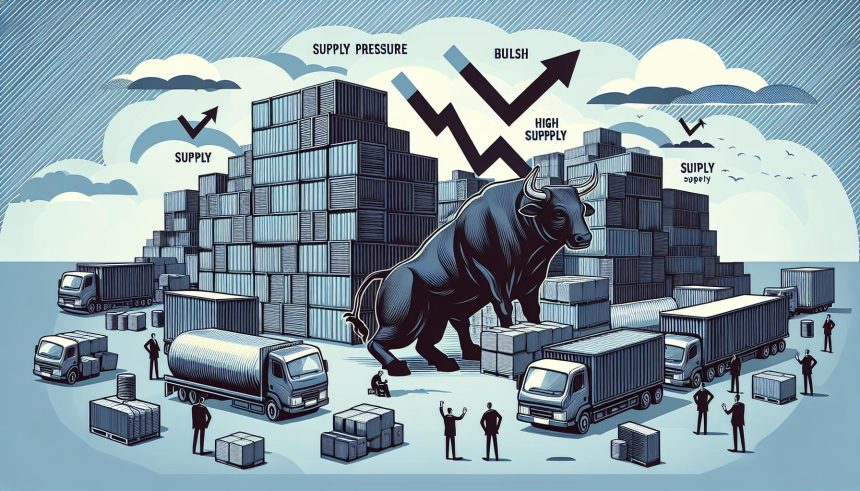
Supply Pressure in Crypto Markets: Meaning, Drivers, and How Investors Use It
Supply pressure is one of the most practical concepts in crypto market analysis because it helps explain why prices move even when headlines stay quiet. On crypto621 we focus on clear frameworks that connect onchain activity, exchange flows, and trader behavior. Supply pressure describes the amount of sell side availability that can push a coin or token price lower when demand does not keep up. When supply pressure rises, more units are ready to be sold at current prices. When supply pressure falls, fewer units are available, and even modest demand can lift prices.
In traditional markets, supply pressure is often discussed through order books and inventory. In crypto, the concept expands into wallets, exchange reserves, miner or validator rewards, vesting schedules, and token emissions. Understanding supply pressure can help traders select entries, set risk controls, and avoid common traps like chasing pumps that are driven by temporary liquidity rather than sustainable demand.
What Supply Pressure Means in Crypto
Supply pressure refers to the intensity of potential selling relative to buying. It is not limited to actual sells that already happened. It includes sell intent and sell capability, meaning how easy it is for holders to move assets to venues where they can be sold. If many holders transfer coins to exchanges, list limit orders, or unlock previously illiquid tokens, supply pressure builds. If coins are withdrawn to cold wallets, locked in staking, or removed from liquid circulation, supply pressure eases.
A key point is that supply pressure is contextual. A large unlock might not matter if demand is strong and market depth is healthy. Likewise, a small increase in sell availability can have a big effect during low liquidity periods such as weekends or during risk off sentiment.
Core Drivers of Supply Pressure
Several factors contribute to supply pressure in crypto. The most important ones usually relate to liquidity and token distribution.
Exchange inflows and reserves: When more coins move onto exchanges, the market often interprets it as increased sell readiness. High exchange reserves can amplify short term selling.
Token emissions and inflation: Proof of work mining rewards or proof of stake staking rewards introduce new supply. If recipients sell rewards to cover costs or take profit, supply pressure increases.
Vesting and unlock schedules: Team, advisor, and investor allocations that become transferable can create predictable waves of additional sellable supply.
Whale distribution: Large holders reducing exposure can create persistent downward pressure, especially when executed through consistent selling across rallies.
Market structure and liquidity: Thin order books and low trading volume make it easier for supply to overwhelm demand, leading to sharper drawdowns.
Sentiment and risk appetite: In fearful markets, holders are more likely to sell into any bounce, effectively increasing supply pressure at key resistance levels.
How to Spot Supply Pressure Using Onchain and Trading Signals
Supply pressure becomes visible when you combine onchain indicators with trading data. No single metric is perfect, but clusters of signals can be informative.
Rising exchange inflow volume: Large or sustained inflows can indicate that holders are preparing to sell rather than hold long term.
Increasing exchange reserves over time: Expanding reserves may imply that more supply is sitting in liquid form.
Declining long term holder supply: If long term holders are reducing balances, distribution may be underway.
Funding rates and positioning: When leveraged longs build up, any negative catalyst can trigger liquidations that accelerate supply pressure through forced selling.
Repeated rejection at resistance with high volume: This often signals that sell side liquidity is absorbing buyers, a classic footprint of supply pressure.
It also helps to watch stablecoin liquidity and spot volume. Strong stablecoin inflows to exchanges can offset supply pressure by increasing buying power. Weak spot demand combined with rising sell availability is a common setup for downside continuation.
Supply Pressure vs Demand Strength
Price is the outcome of supply meeting demand. Supply pressure alone does not guarantee a drop, just like high demand does not guarantee a rally if supply is even stronger. The most useful approach is to evaluate both sides.
When demand strength is growing, such as during new user adoption, major integrations, or increased network fees that reflect real usage, it can absorb new supply. When demand is weak, even routine emissions can weigh on price. This is why some high inflation tokens struggle to sustain rallies unless there is a consistent catalyst that expands demand faster than supply.
Why Supply Pressure Matters for Risk Management
For investors and traders, supply pressure is a risk variable. If you can identify periods of elevated sell side availability, you can adjust position sizing, reduce leverage, or wait for confirmation that selling is exhausted.
Common risk management applications include planning around unlock dates, avoiding entries immediately after large exchange inflow spikes, and using market structure such as support and resistance to define invalidation points. If a token is facing a major increase in liquid supply, it may require unusually strong demand to hold key levels.
Practical Ways to Navigate Supply Pressure
You can respond to supply pressure without overcomplicating your strategy. The goal is to align your timing with healthier supply conditions.
Track unlock calendars and emissions: Know when new supply can enter circulation and treat those windows as higher risk.
Prefer assets with improving circulation dynamics: Falling exchange reserves or increasing staking participation can reduce liquid supply.
Wait for absorption signals: Sideways consolidation after heavy selling can indicate that buyers are absorbing supply.
Use volume and structure together: Breakouts that occur on strong spot volume are more trustworthy than low volume moves.
Plan entries around liquidity: In thin markets, supply pressure can produce sudden wicks. Wider stops or smaller size may be appropriate.
Final Thoughts on Supply Pressure
Supply pressure is a foundational idea for understanding crypto price behavior because it connects token mechanics with real market liquidity. By monitoring exchange flows, emissions, unlock schedules, and trading structure, you can form a clearer view of whether sellers are likely to dominate or whether demand can absorb available supply. On crypto621 we recommend treating supply pressure as a living signal that changes across market cycles. When you respect it, you gain a stronger edge in timing, risk control, and long term positioning.